You finally get the drawers sorted, and three weeks later the pants are above the ankles. Kids grow on their own schedule, and it's never the one you planned for.
Whether you're a parent, a grandparent, a guardian or the aunt or uncle who always buys the birthday sweater, keeping up with growing kids is mostly about rhythm. Here's a simple routine that works for one child or five.
Do a size check at every season change
Four times a year (or twice, if that's what you have time for), set aside an hour for a try-on.
- Pull everything for the coming season. Last year's snow pants, the spring jacket, the shorts from the bottom drawer.
- Try on the things that matter most. Outerwear, boots, shoes and anything for school or a special day. T-shirts can be judged by eye.
- Sort into three piles: fits now, fits soon, too small.
Make it easy on kids. Short sessions, a snack, and let them pick the music. A tired kid trying on snow pants in a warm house is nobody's favourite afternoon.
Keep a "next size up" bin
Hand-me-downs, sale finds and gifts that are still too big need a home. A labelled bin for each size, in a closet or under a bed, keeps them from getting lost.
- Label by size, not by child. Clothes move between siblings, cousins and friends.
- Add the season to the label. "Size 7, winter" is easier to find in October than "Size 7."
- Check the bin before you shop. It's easy to forget what's already waiting.
Hand down, sell or pass on
The "too small" pile is good news: it means they grew. Things in good shape can go to a younger sibling, a cousin, a friend's kid, a local buy-and-sell group or a donation centre. Kids' clothes often have plenty of life left in them.
If something has a story, like the first hockey jersey or the outfit from a big day, it's fine to keep a small box of favourites. No rules about how many.
Make hand-me-downs feel like theirs
The youngest in a family can end up wearing mostly older siblings' clothes. That's practical, and most kids don't mind. A few small things help:
- Let them pick one new thing each season, even if it's just socks or a toque.
- Swap name labels so it's clearly their jacket now.
- Talk it up. "This was your cousin's favourite" lands better than "this is old."
Winter gear needs its own plan
In Canada, winter gear is where kids' clothes get expensive. Snowsuits, boots, mitts and toques need to fit properly to keep kids warm.
- Check winter gear early, in September or October, before the first cold snap and before the stores run low on popular sizes.
- Boots need room to wiggle toes. Tight boots are cold boots, at every age.
- Buy mitts in multiples. They go missing. Every family knows this.
- Look for gear swaps. Many schools, community centres and sports clubs run them in the fall.
Plan for the special days
School photos, concerts, weddings, a holiday dinner. These have a way of showing up right after a growth spurt.
- Keep one nicer outfit in the current size, and check it fits a week before any big day, not the morning of.
- Write the dates down. If you know picture day is in September, you can check the outfit during your fall size check.
- Borrow when it makes sense. A suit or dress worn once is a great thing to borrow from family or friends, or to pass along afterward.
Buy a little ahead, not a lot
It's tempting to stock up when there's a sale on the next size. A little is smart. A lot is a gamble: kids can grow faster than you expect, or change what they're willing to wear. One season ahead is usually enough.
Let them help
Kids are more likely to wear clothes they had a say in.
- Low rails and bins at their height let them reach their own things.
- Pictures on drawers help little ones put things back.
- Offer two choices. "This shirt or that one" works better than "What do you want to wear?" at 7:45 a.m.
Keep a list for each kid
Most of us carry kids' sizes around in our heads, and then stand in a store unsure if it's a 6 or a 7.
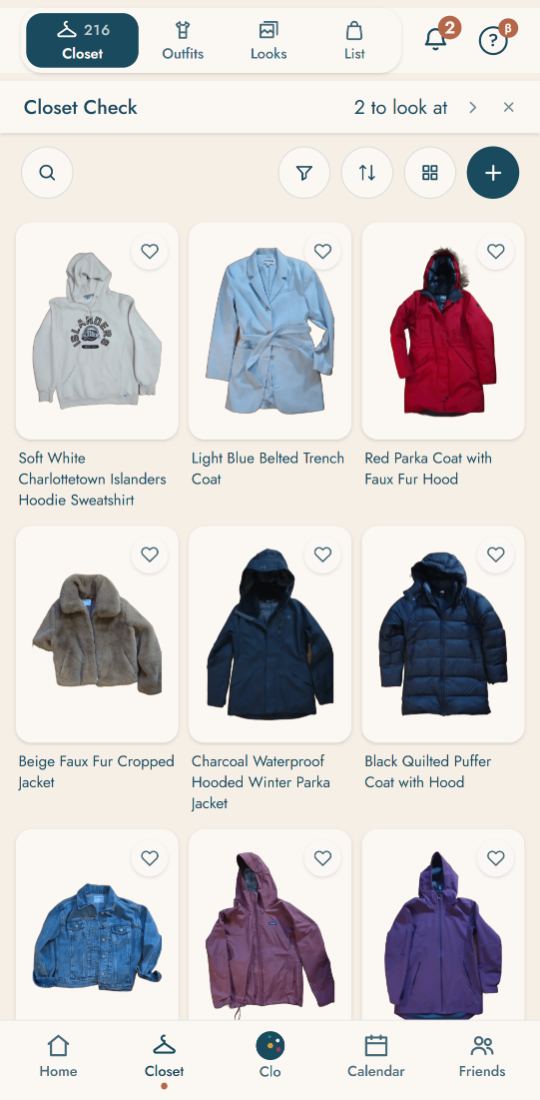
Closet Cue has People you shop for: a separate shopping list and saved looks for someone else, like a partner, a friend or a child. You can keep a list for each kid of what they need for the coming season, so it's on your phone when you're at the store. One person is free. More than one person (say, two or three kids) is Pro. With Pro, you can also set a budget on each list and get price-drop and sale alerts on the things you've added.
To be clear: this is for shopping lists and looks for the people you shop for. Closet Cue doesn't track a child's whole closet. Your own closet is where the app does the full outfit planning.
The short version
Check sizes at every season change. Keep a labelled "next size up" bin. Check winter gear early, buy one season ahead at most, and keep a list for each kid so you're not guessing in the store.