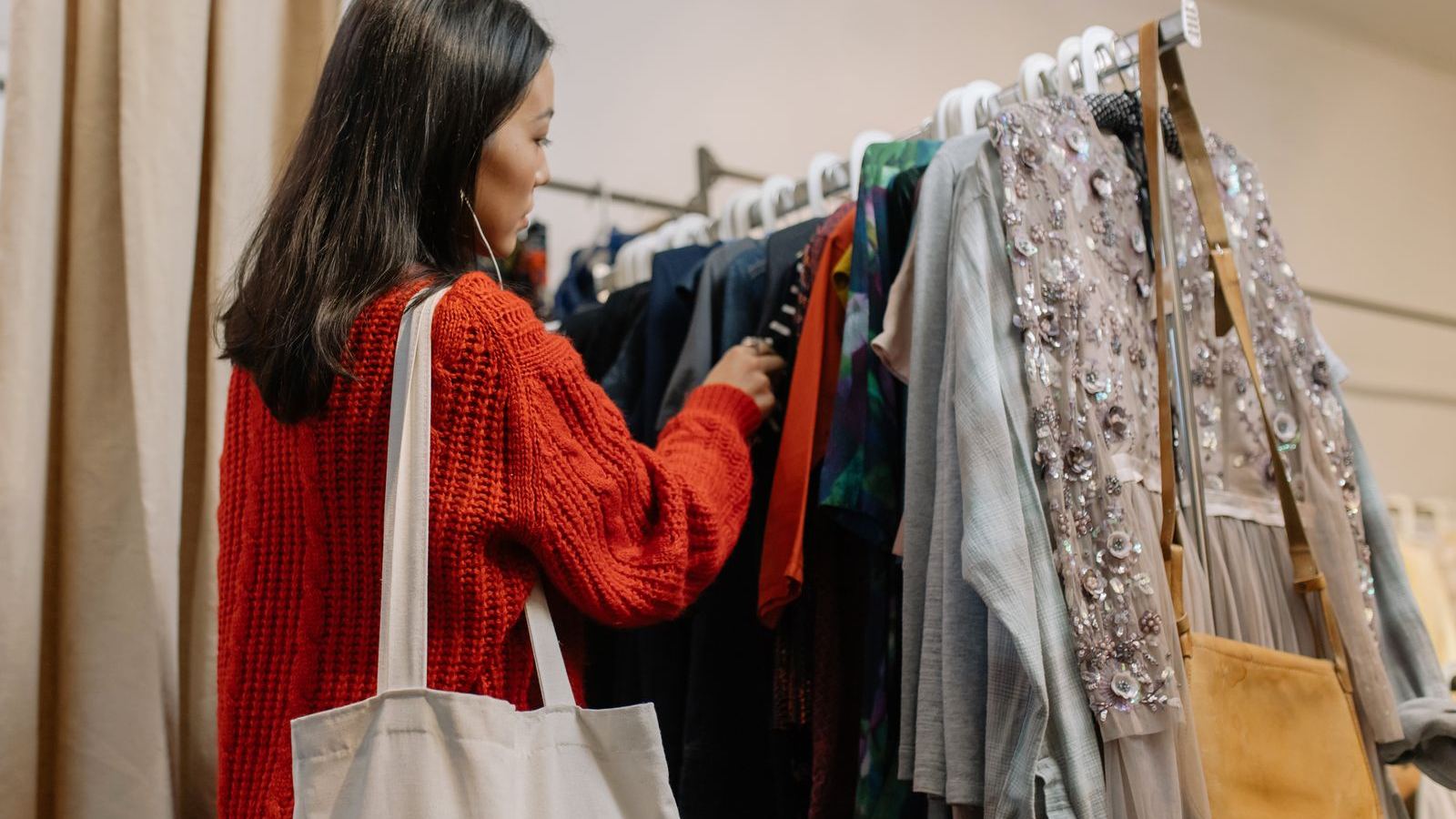
The rack is full, the prices are low, and everything looks like a maybe. That's the fun of thrifting. It's also how a $6 jacket ends up hanging in your closet for two years with the tag still on.
Second-hand shopping is a great way to get good clothes for less. The trick is to bring home things that work with what you already own, so they get worn. Here's how, whatever your style, size or budget.
Before you go: know what you have
Thrift stores are random. You can't go in with a strict list, but you can go in knowing your gaps.
- Look at what you wear most. Those are your favourites. A find that pairs with them will get worn.
- Name two or three real gaps. A warm layer that goes with your jeans. Trousers that aren't black. A shirt for the dinner you keep going to in the same thing.
- Know your measurements. Sizes vary a lot between brands and decades. A measuring tape in your bag tells you more than the label does.
At the rack: the three-outfit test
Before anything goes in the basket, try to name three outfits you could wear it in, using clothes you already have at home. If you can, it's probably a good find. If you can only picture it with things you'd still need to buy, it's a project, not a find.
Also ask: would I buy this at full price? If the only reason is the price tag, put it back. Cheap things you don't wear still cost money.
Know what's worth looking for
Some things are great second-hand. Others are harder to get right.
- Usually worth it: wool coats, leather boots and bags, denim, blazers, knitwear and well-made shirts. They're built to last, so they often have years left in them.
- Look more carefully: shoes with worn-down soles or insoles, stretchy activewear, and anything where the fit has to be just right.
- Go for the fabric, not the brand. A no-name wool sweater in good shape will usually outlast a well-known label in thin fabric.
Check it before you buy
Second-hand means checking a little more carefully.
- Seams and underarms: look for pulled stitching and thinning fabric.
- Zippers and buttons: try them. Missing buttons are easy to replace; broken zippers cost more.
- Pilling and stains: a little pilling comes off with a fabric shaver. Old stains usually don't come out.
- The fabric label: wool, cotton, linen and good denim often hold up well second-hand.
- Fit: try it on if there's a fitting room. If it needs altering, add the cost of the tailor to the price before deciding.
Price it like anything else
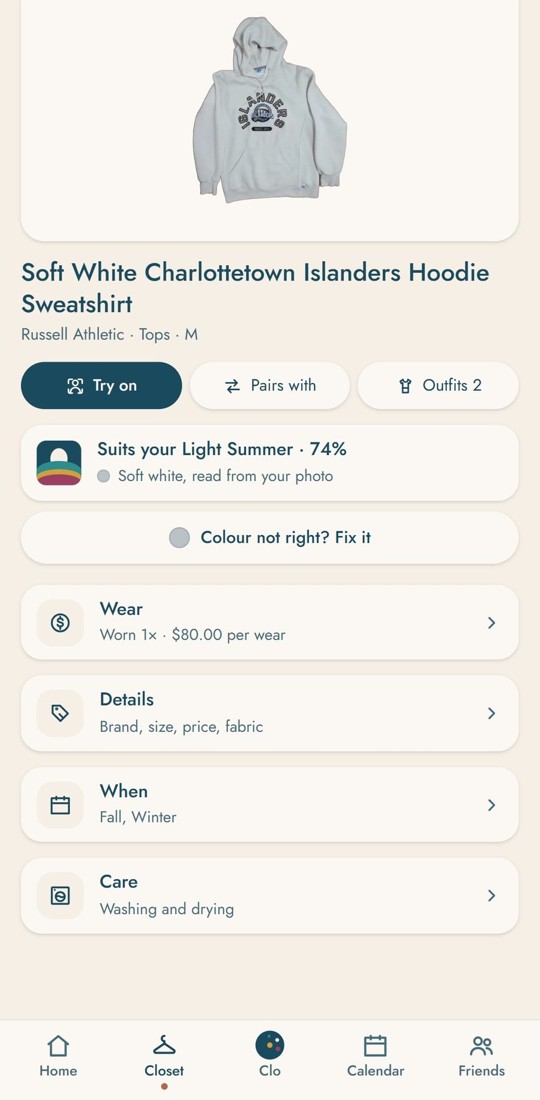
Cost per wear works for thrift finds too. Divide what you paid by how many times you've worn it. A $12 coat worn all winter is a great deal. An $8 shirt worn once is $8 a wear. It's the same math whether something came from a mall or a church sale.
Buying second-hand online
Online marketplaces and resale apps follow the same rules, with one extra step: you can't try anything on.
- Ask for measurements, not just the size on the label. Compare them with something you own that fits well.
- Ask for photos of any flaws in good light.
- Check the return policy before you pay. Many private sales are final.
Bringing it home
- Wash or clean it first. Follow the care label, or ask a dry cleaner about anything delicate.
- Add it to your closet right away, with what you paid. If it goes straight into a pile, it tends to stay there.
- Wear it within two weeks. The first wear is the hardest. Once you've worn something once, you'll reach for it again.
- Pair it with your basics. One vintage or statement find per outfit, anchored by things you wear all the time, looks pulled together instead of costume.
Where an app helps
Thrifting is mostly instinct, but the "do I already own this?" question is where people slip. Most of us have bought a second grey cardigan without meaning to.
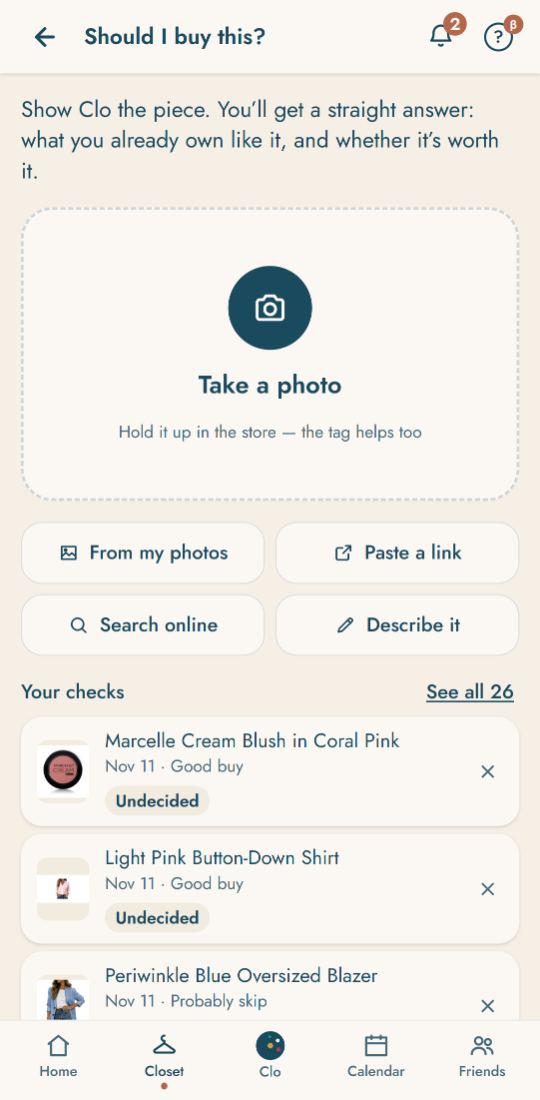
In Closet Cue, you can check while you're standing at the rack. The in-store check shows things you already own that are similar, before you get to the checkout, and it's free. With Pro, Should I buy this? looks at a photo of the find and shows what you'd wear it with, and Looks like what you own compares it with every photo in your closet and tells you if you already have it, or something very close.
Once you're home, take a photo and Clo, the app's stylist, fills in the type, colour and fabric for you (on the free version, for your first 50 things). Add what you paid, and every wear counts toward its cost per wear.
Passing things on
Thrifting works best as a loop. When something stops working for you, sell it, swap it or donate it, so it becomes someone else's good find.
The short version
Know your gaps. Picture three outfits before you buy. Check the seams, the zippers and the fit. Then wear it within two weeks, with things you already love.