
Quick question: what's your closet worth?
If you've never added it up, the answer can be a surprise. Clothes come in one or two at a time, over years, so the total never shows up anywhere. Nobody gets a bill for "your closet."
Knowing the number isn't about guilt. It's useful, for a few very practical reasons.
How to add it up
- Go category by category. Coats and boots first, then everyday tops, bottoms, knits, shoes and accessories. Small groups are easier to estimate.
- Use what you paid. If you don't remember, a fair guess is fine.
- Gifts and hand-me-downs: put in what they would have cost, or $0. Your call.
- Know which number you want. What you paid and what something would sell for today are two different numbers. What you paid shows where your money went. Today's value matters more for insurance or for selling.
By hand, this takes an afternoon with a notebook. The easier way is to do it as you go: enter the price when you add something new, and fill in older things a few at a time.
Why the number matters
It helps if something goes wrong. A fire, a flood, a break-in. If you ever need to make a home insurance claim, a list with photos, prices and where you bought things is far easier than trying to remember everything on a stressful day. Ask your insurer what kind of records they want.
It helps when you move. Movers and insurers may ask what your belongings are worth. Clothes are easy to forget, and they add up.
It puts "nothing to wear" in perspective. Seeing the total is a reminder that the problem usually isn't what you have. It's seeing it and using it.
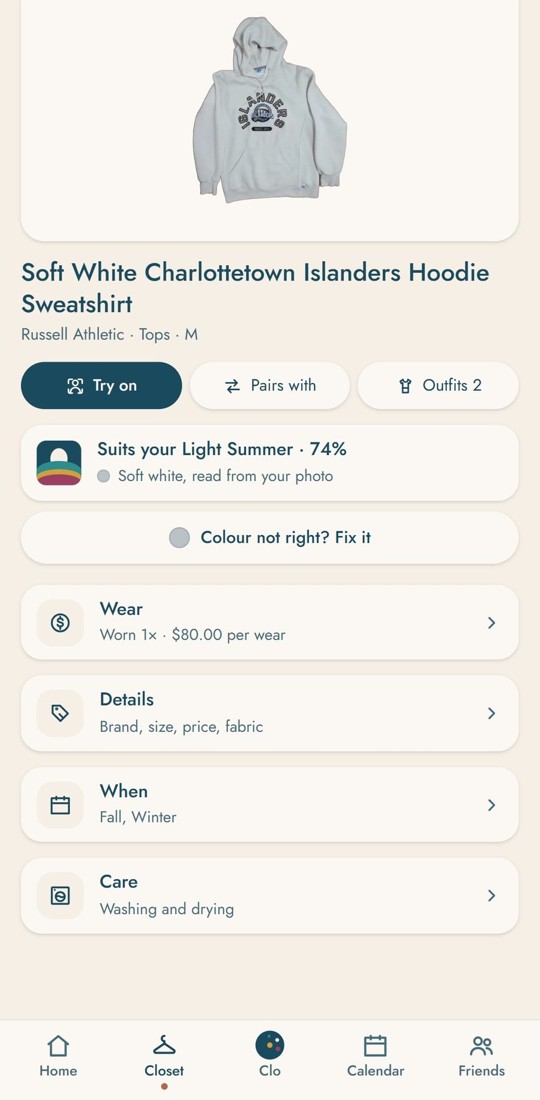
It makes cost per wear real. Price ÷ wears tells you what each thing costs every time you put it on. The things you wear often get cheaper with every wear. The things you never wear stay at full price.
It makes shopping calmer. When you know what you have and what you wear, it's easier to tell whether something new adds to your closet or repeats what's already there.
About the "never worn" number
Most closets have a few things that haven't been worn yet. That's money already spent, and there's no point feeling bad about it. There are good options:
- Wear it this week. A Tuesday counts.
- Get it altered so it fits the way you want.
- Lend it to a friend, or sell it.
- Pass it on to someone who'll wear it.
Each one turns money already spent into something useful.
Keep it simple
You don't need the total down to the cent. A close-enough number, kept up to date, is plenty. Add new things as they come in, and keep a copy of your list somewhere outside your home, like a cloud folder or an email to yourself, in case you ever need it.
In Closet Cue
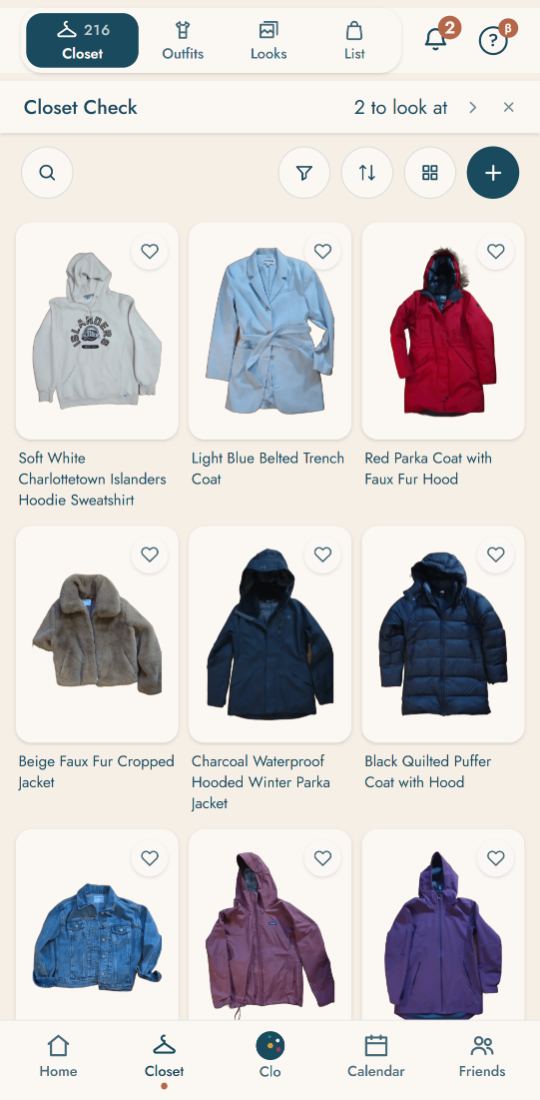
Closet stats are free: what you've worn, what you've never worn, cost per wear, and your closet's total value, from the prices you enter. Every item can hold its price, size, where you bought it and a photo, and you can export everything, photos included, any time. Pro adds deeper closet numbers and a monthly clothing budget tracker, and the app can read a receipt or hang tag to fill in the price for you.
The short version
Add up what you paid, keep it current as you go, and keep a copy. Use the number for insurance records, for cost per wear and for calmer shopping. It's not about feeling bad. It's about seeing what you have.