You've probably seen it online: someone holds up a gold fabric, then a silver one, and announces they're a "Deep Autumn." It looks like magic. It isn't. It's a simple way of sorting colours, and once you know how it works, you can try it yourself.
First, what it is (and what it isn't)
Seasonal colour analysis is a styling tradition. It groups colours into four "seasons" so it's easier to pick the ones you like seeing near your face.
It isn't science. There's no lab test behind it, and two people can look at the same face and see different seasons. Lighting, your camera and even the colour of the wall behind you can change the result. Treat your season as a helpful starting point, not a verdict.
And it works for everyone. Every season includes people of every skin tone, every gender and every age. It's about how colours sit next to your skin, hair and eyes, and everybody has those.
The three things it looks at
1. Undertone: warm or cool. Warm colours lean yellow or golden (think camel, tomato red, olive). Cool colours lean blue or pink (think navy, raspberry, icy grey). Some people sit in the middle, and that's common.
2. Depth: light or deep. Some people look best in lighter colours. Others look best in deeper, richer ones.
3. Clarity: bright or soft. Bright colours are clear and saturated, like a primary red. Soft colours are a little muted, like a dusty blue.
The four seasons, in one line each
- Spring: warm, light and bright. Coral, warm turquoise, golden yellow.
- Summer: cool, light and soft. Powder blue, soft rose, lavender, grey-blue.
- Autumn: warm, deep and soft. Rust, olive, mustard, warm brown.
- Winter: cool, deep and bright. Black, pure white, royal blue, emerald.
And the 12 seasons?
Many systems split each season into three, for 12 in total. Spring becomes Light, Warm and Bright Spring. Summer becomes Light, Cool and Soft Summer. Autumn becomes Soft, Warm and Deep Autumn. Winter becomes Deep, Cool and Bright Winter.
The 12 seasons are useful if you sit between two of the four. Someone who's a little warm and very soft, for example, might be a Soft Autumn.
How to guess yours at home
You'll need daylight, a mirror or your phone's front camera, and a few things from your closet.
- Sit by a window in daylight. Skip lamps and bright overhead lights.
- Start with a bare face. No makeup if you wear it, and pull your hair back or cover it with a white towel.
- Hold two colours under your chin, one at a time. Try a warm one and a cool one: a cream shirt and a bright white one, a gold necklace and a silver one, a tomato red and a raspberry.
- Look at your face, not the fabric. Which one makes your skin look even and clear? Which one makes shadows or redness stand out more?
- Take photos and compare later, or ask a friend who'll be honest.
Do the same with light against deep, then bright against soft. Put your three answers together and you'll have a good first guess.
What to do with your season
- Use it near your face. Tops, scarves, collars, glasses, ties, toques. That's where colour makes the biggest difference.
- Keep the colours you love. If your favourite colour isn't "in your season," wear it lower down: trousers, shoes, a bag.
- Add a good neutral. A colour you love next to a neutral that suits you can change the whole look.
- Use it when you shop. It's a quick filter, not a rule.
- Don't throw anything out. Your season is about what to reach for next, not what to get rid of.
Find your season in Closet Cue
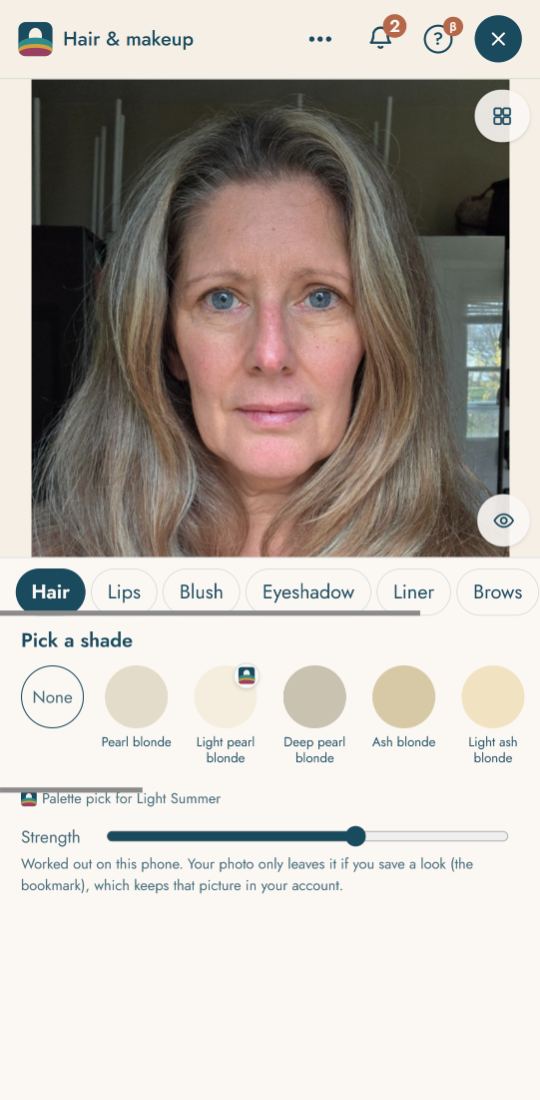
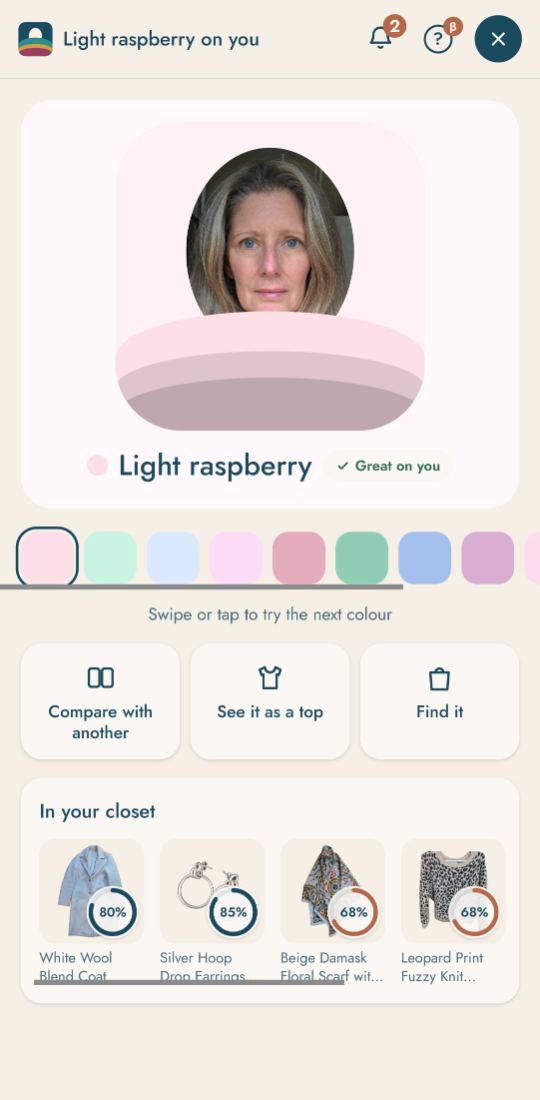
In Closet Cue, the 4-season colour quiz is free. If you want more, Palette by Closet Cue is part of Pro. It reads your colouring from a photo across all 12 seasons (a full reading uses 1 to 2 Clo credits), then shows your best colours, neutrals and makeup shades. You can tap any colour to see it next to your own face, and see how much of your closet already suits you. The AI features are optional; your photos are stored in Canada, and the AI runs on servers in the US.
The short version
Your colour season comes down to three things: warm or cool, light or deep, bright or soft. It's a styling tool, not science, and it works for every skin tone and every gender. Use it near your face, and keep wearing what you love.